

Angels and Demons
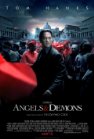 The opening scene at the CERN physics laboratory where an experiment to create anti-matter (The God particle) takes place is visually stunning. Rome and its Catholic rituals provide a beautiful backdrop for the film. The next two hours, however, are a wild car chase through Rome that I found pretty annoying after a while. The last 25 minutes bring an unexpected turn of events that left me moderately satisfied with the film.
Continue Reading
David Brooks dissects the Decline on the Republican Party
 The only columnist who I follow every week is David Brooks. Maybe you should too.
The Long Voyage Home By DAVID BROOKS (NY Times)
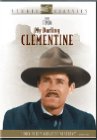
Republicans generally like Westerns. They generally admire John Wayne-style heroes who are rugged, individualistic and brave. They like leaders—from Goldwater to Reagan to Bush to Palin—who play up their Western heritage. Republicans like the way Westerns seem to celebrate their core themes—freedom, individualism, opportunity and moral clarity. But the greatest of all Western directors, John Ford, actually used Westerns to tell a different story. Ford’s movies didn’t really celebrate the rugged individual. They celebrated civic order. For example, in Ford’s 1946 movie, “My Darling Clementine,” Henry Fonda plays Wyatt Earp, the marshal who tamed Tombstone.
Tokyo & Kyoto, Japan
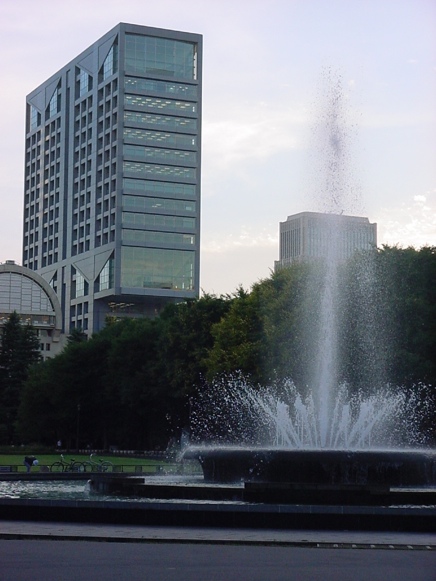 For many years, I dreamed about going to Japan. This is my first time visiting an Asian country. What strikes me right away is how friendly Japanese are not only to strangers but also to each other. Perhaps this is just show. Not understanding Japanese at all, I cannot figure out what goes on behind these friendly faces. I am surprised by how much I like Tokyo’s hypermodern Kinza district. Typically I react coldly to modern cities that grew quickly. Jeffrey Alexander articulated precisely the quality of cities such as Paris that grew very slowly over many centuries, giving builders time to make the whole fit together in an organic way: They make you feel more alive. LA, New York, Chicago may awe your eye but they don’t make me feel more alive. In the U.S, only San Francisco, Charleston, or Portland, Maine had this effect on me. Much of modern architecture of the Kinza district is so well done that I feel mysteriously attracted to this urban space (See photos). Kyoto’s charms are the opposite of Tokyo’s.
  There is no coherence to the layout and design of modern Kyoto. Modern Kyoto represents architectural chaos. The idea of building codes seems to have eluded the city council. The charm of this city lies in the old palaces that the rulers of Japan built when Kyoto was the capital city. Did they want to calm their minds by erecting buildings whose lines are straight dispensing with elaborate ornaments? European rococo castles from the same era could not be more different. The imperial palace is a place to calm your mind. Perhaps Barak Obama should build himself a little Japanese garden in addition to the new basketball court that is planned for the White House.
Continue Reading
Frankfurt, Germany
 I had a few hours to kill after landing at the Frankfurt airport. Since Frankfurt is not one of the obvious tourist attractions of Germany, I had never visited the old city center. I entered the historically significant Paulskirche, where representatives from all over Germany met in 1848 to discuss German unification and a constitution for Germany inspired by the French revolution. But reactionary forces gained the upper hand and the so-called 1848 revolution was squashed by the middle of the next year. Today the church is a museum commemorating the constitutional convention of 1848/9. On the walls inside the church you can read the proclamations that were made by the convention in the Paulskirche. I am surprised just how similar the principles are to what was enacted in 1919, ushering in the Weimar Republic. It now becomes clear to me that convention in 1848 was not the failure that history books had made it out to be. The convention wrote the blueprint for all future democratic constitutions of Germany. After leaving the church, I went to a little souvenir shop across the road.
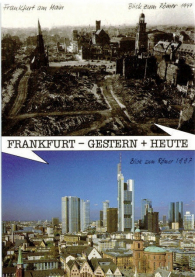
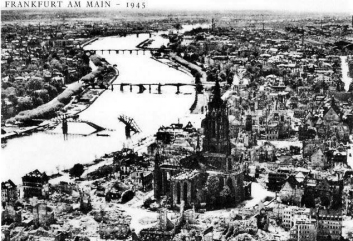 Next to many postcards of Frankfurt today it had two postcards that show what Frankfurt looked like right after World War II. These pictures send a clear message: It is not a good idea to elect people in the highest office who are crazy. During what now seem twelve short years (the period from 1933 to 1945), the dreams and delusions of German citizens led a catastrophe that is symbolized by destruction (see photos) of such historic cities as Frankfurt. Thank God that Hitler was so fond of Paris that he gave a strict order not to bomb the French capital otherwise Paris would look like modern day Frankfurt.
Enlarge Photo 1
Enlarge Photo 2
Continue Reading
Hellhole: Is solitary confinement torture?
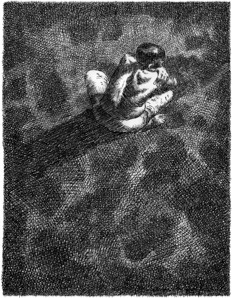 I knew that humans beings are social creatures and that we need others to reach our highest potential. But I had no idea that the brain completely disintegrates after longer periods of solitary confinement that is now practiced in many U.S. prisons. Read this fascinating story by Atul Gawande in the New Yorker. He happened upon the findings in the mid-fifties, when he decided to save money for his primate-research laboratory by breeding his own lab monkeys instead of importing them from India. Because he didn’t know how to raise infant monkeys, he cared for them the way hospitals of the era cared for human infants—in nurseries, with plenty of food, warm blankets, some toys, and in isolation from other infants to prevent the spread of infection. The monkeys grew up sturdy, disease-free, and larger than those from the wild. Yet they were also profoundly disturbed, given to staring blankly and rocking in place for long periods, circling their cages repetitively, and mutilating themselves.
TAILS OF MANHATTAN
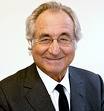 I no longer have the patience to watch Woody Allen movies, but his short pieces in the New Yorker are still fun to read. Here is a wonderful postscript to the Madoff Ponzi scheme that made many jewish people wonder why they would be so credulous.
Woody Allen in New Yorker, March 30, 2009: Two weeks ago, Abe Moscowitz dropped dead of a heart attack and was reincarnated as a lobster. Trapped off the coast of Maine, he was shipped to Manhattan and dumped into a tank at a posh Upper East Side seafood restaurant. In the tank there were several other lobsters, one of whom recognized him. “Abe, is that you?” the creature asked, his antennae perking up.
“Who’s that? Who’s talking to me?” Moscowitz said, still dazed by the mystical slam-bang postmortem that had transmogrified him into a crustacean.
“It’s me, Moe Silverman,” the other lobster said.
Continue Reading
Blood on the Water: Oxford Versus Cambridge.
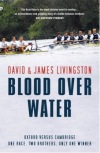 This review in the Economist wetted my appetite. I will read this book during my summer holiday. The Economist: SIBLING rivalry has many famous examples. Cain and Abel, Linus and Lucy, Liam and Noel. Less well-known, but no less competitive, are David and James Livingston, two brothers who, in April 2003, raced on opposite sides in the Oxford and Cambridge University Boat Race, one of the toughest sporting challenges in the world. “Blood Over Water”, published to coincide with the 155th boat race on March 29th, tells in alternating narratives the story of how the brothers’ quest for victory turned them into enemies. Providing context is the broader tale of the historic rowing competition between two prestigious universities.
How to Help Children Survive Separation and Divorce
 The Economist reports: JULIE LYNN EVANS, a well-known British psychotherapist, deals with troubled children with remarkable devotion and insight. As the recession puts added strain on many marriages, her account of the mental stresses and strains that parental break-up inflicts on children could not be more timely.Many of the children Ms Evans sees do not want to talk at all, regarding grown-ups as untrustworthy or irrelevant. She starts by getting them to depict their lives in spray-painted graffiti on giant sheets of paper, or by making models from sand or clay.
Pirates of the Caribbean: The Curse of the Black Pearl
 This fairy tale reminded me of children’s theatre, a visit at the circus, and a Hollywood love story and action film all mixed into one. It is fun to watch Jonny Depp play a pirate who has been deposed by his crew and now wants to regain his position as the captain of a famed pirate sailing ship. Some of the dialogues are excellent. The writers know how to put together entertainment for all ages.
Continue Reading
I want to join the “Century Club”
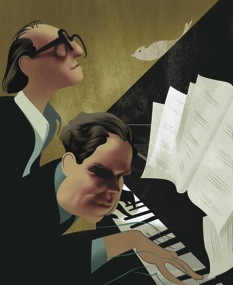 I want to be as productive as Elliot Cook Carter at 100. Read this fascinating story about the concert in New York a few months ago.
Alex Ross. (The New Yorker). The last emperor of China had just assumed his throne. William Howard Taft, the President-elect of the United States, was meeting with Theodore Roosevelt at the White House. A deranged veteran of the Philippine war terrorized Edgewater, New Jersey, holding up a hotel. The diva Nellie Melba disembarked from the Lusitania, resplendent in a broad-brimmed hat. Gustav Mahler was about to conduct the last of three concerts at Carnegie Hall, having unleashed his Second Symphony a few nights earlier. And Elliott Cook Carter, Jr., was born in New York City. It was December 11, 1908. A hundred years later to the day, Mr. Carter walked onstage at Carnegie, a little hunched but moving under his own power,

© 2026 Peter Murmann. Powered by ExpressionEngine.


